Last week, I taught a course named Phatastics Physics to a group of high-ability adolescents (7th-8th graders) at Purdue University. I was excited (and quite scared, to be honest) to teach physics after a long gap (yeah, 7 years). I was under pressure because I was substituting my friend who was down with COVID-19, and I had no time whatsoever to prepare. Sadly, I had to rely on my prior knowledge of physics. This is scary, especially while entering a class of intelligent and curious adolescents.
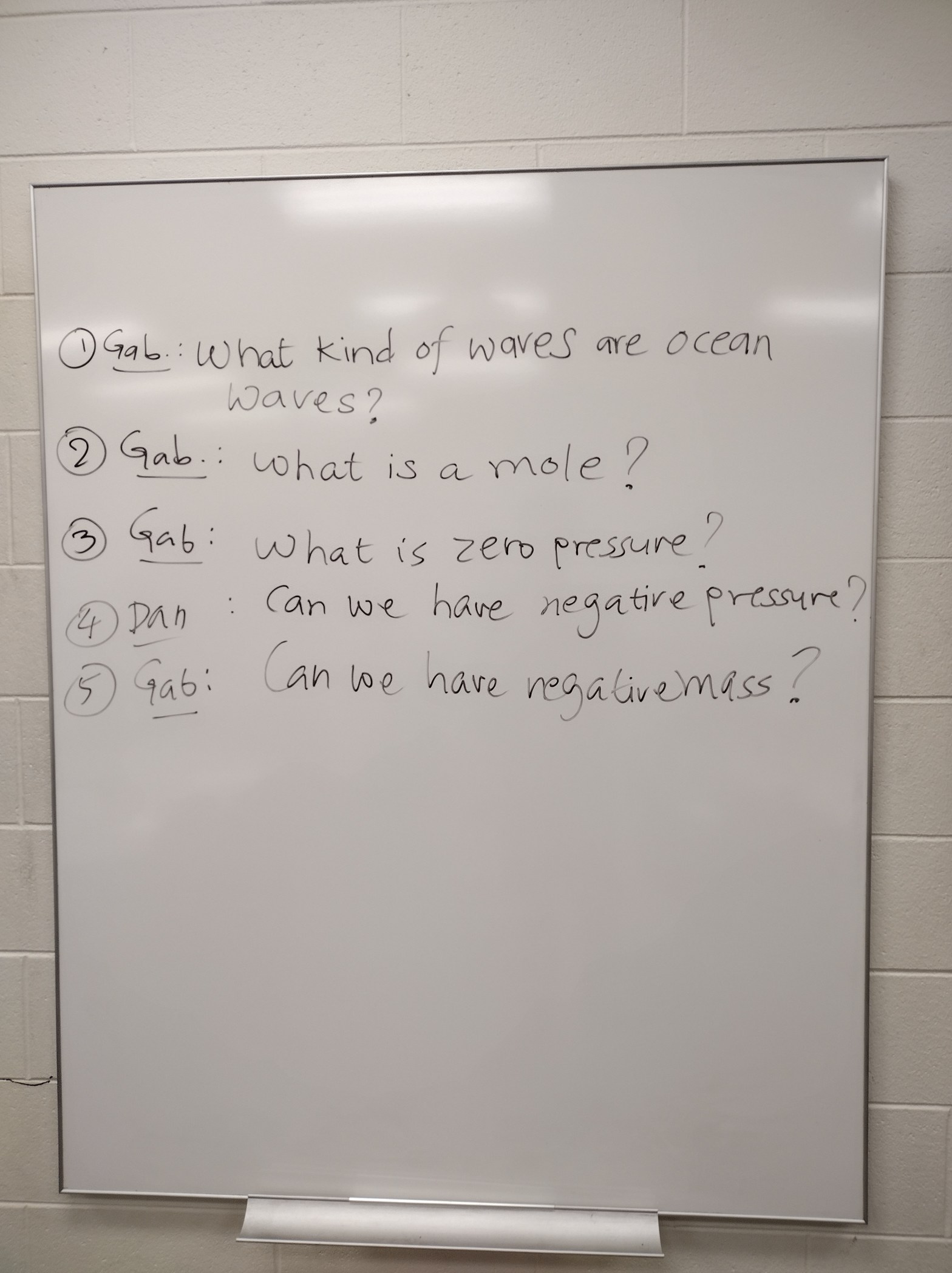
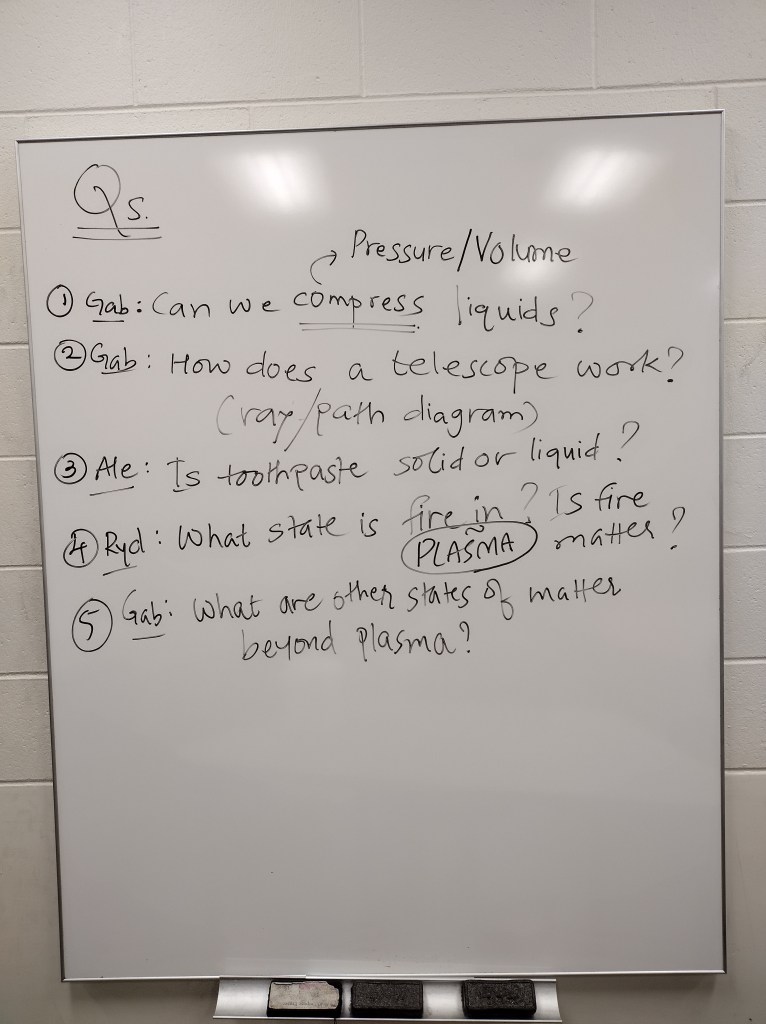
As expected, students asked many intriguing questions. For example, we started with the concepts of matter, and a curious student asked, “What is the state of fire?” I was stumped. I had never wondered about the fire. Poor me! While discussing the concepts of pressure, another student asked, “Can pressure be negative?” The same day his friend asked, “What kind of waves are the ocean waves?”
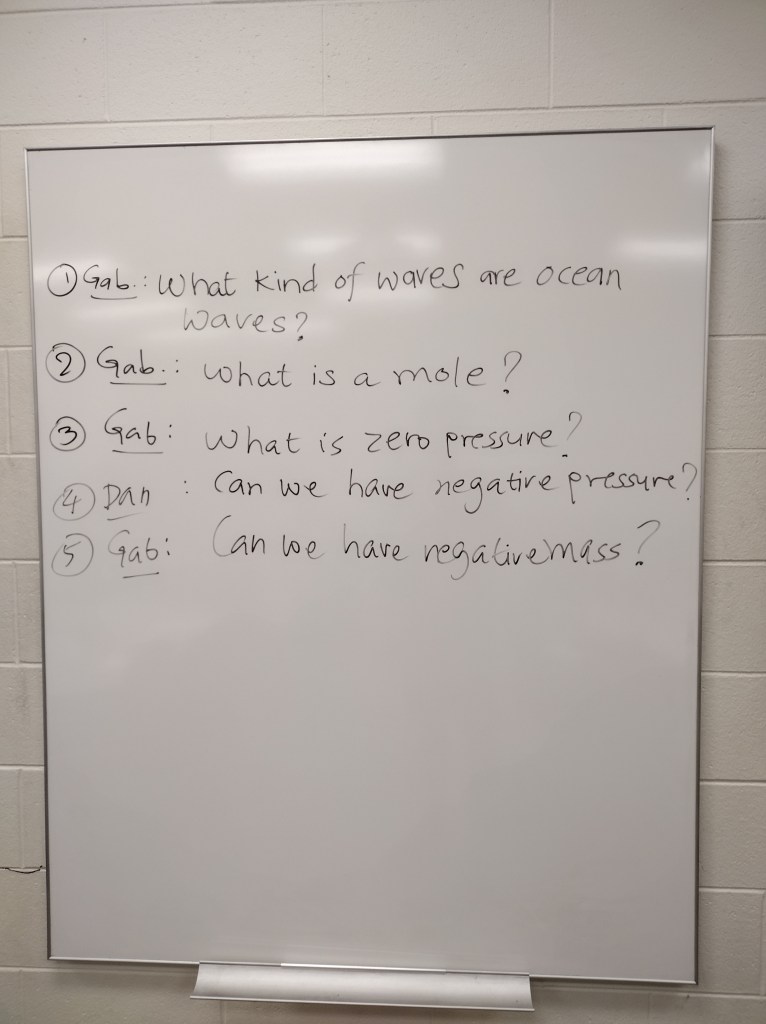
As confessed earlier, I did not know the answers to some of their questions (which is fine, I guess). And I did not want to give out the answers I knew without making them wonder about those questions (because that is criminal, I believe). That’s when I created the “wonderment board,” where we would collect all the questions we asked in class that day. (You can keep a Google Doc or an Excel Sheet too!) I would then use the time at home to find the answers while students would also wonder about them till we met again.
The next day, we would think about the questions on the wonderment board, and I would gently direct the students toward answers. Sometimes, we would set up an experiment to find the answer ourselves. Unsurprisingly, my students–my learning partners–enjoyed these discussions a loooot. They loved the interaction. They loved the sense of wonderment more than anything else.
My students challenged me a lot through their questions, and I believe, I learned more through finding the answers to them. The wonderment board served as a superb tool to keep our discussions alive and continuous. That is when I realized that straightforward answers sometimes kill the conversation and therefore, curtail the wonderment. Wonderment is important in learning, and so is the wonderment board. Try it!
 Aakash Chowkase