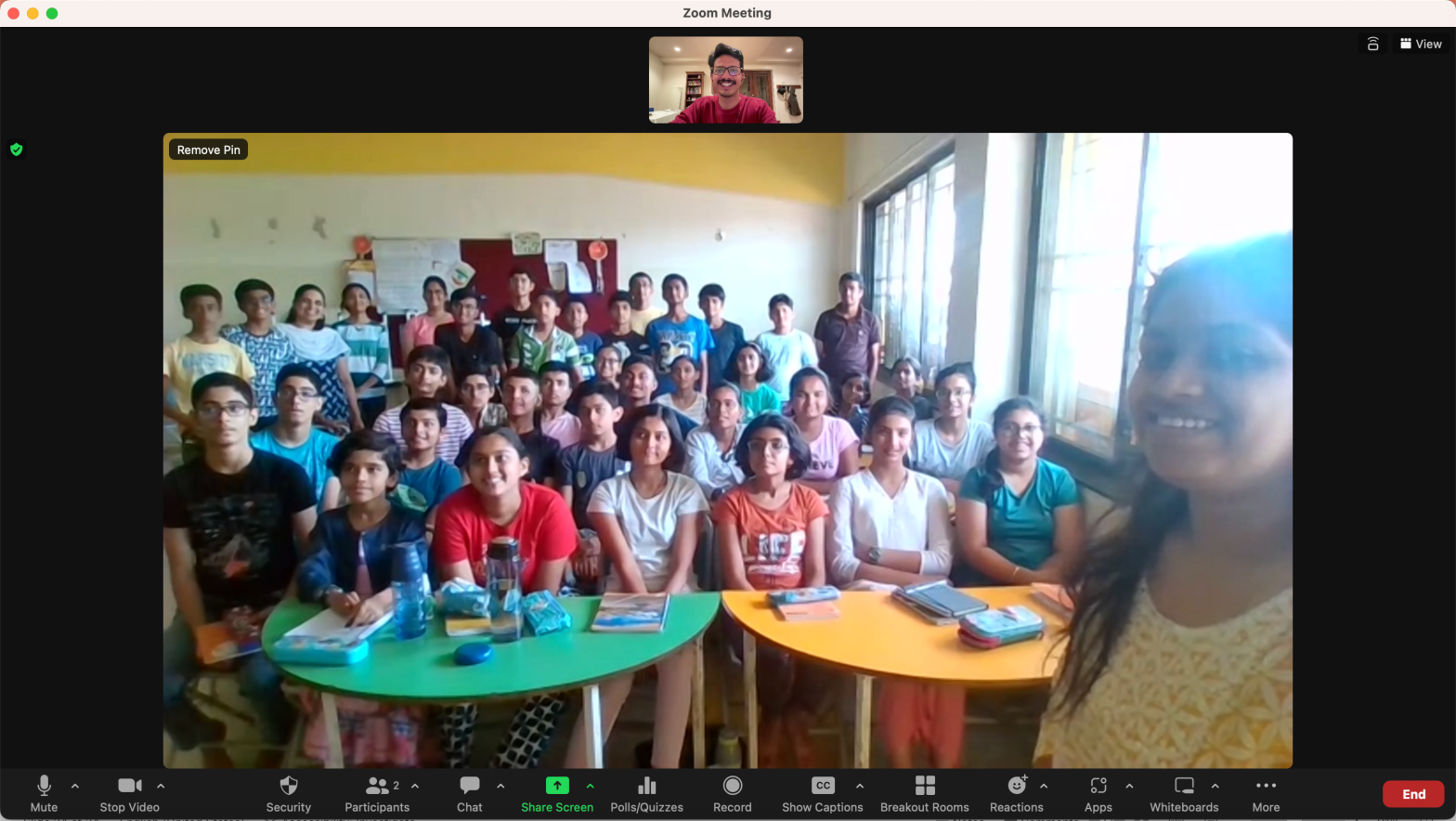
Last year, I conducted a workshop on responsible leadership (RL) at a #leadership development summer program for #adolescents in #India. I introduced the idea that leaders should assume #responsibility not only toward beneficiaries but also people, society, and the planet. After all, we have plenty of irresponsible leaders in the world.
I also introduced 5 key principles of RL:
1. Being able to make ethical judgments about existing norms (e.g., questioning unethical practices)
2. Displaying moral courage and aspiring for a positive change (e.g., taking a stand against immoral things)
3. Engaging in long-term thinking and perspective-taking (e.g., gauging the harms to people, society, and the planet)
4. Communicating effectively with stakeholders (e.g., building trust, maintaining transparency), and
5. Participating in collective problem-solving (e.g., involving all parties affected by a decision in problem-solving)
Today, a year later, I talked to the same group about the same topic–RL. At first, I was not sure what new I could say to them, but as I started preparing my pitch, I decided to stick to the first principle of RL–ethical judgment.
Obviously, my mind went to trolley problems as they are a great tool to invoke ethical dilemma. Trolley problems are a series of thought experiments involving ethical dilemmas. about saving lives. I had used trolley problems in a 9th-grade classroom 10 years ago to talk about the idea of justice. However, I didn’t want to limit today’s discussion to hypothetical situations. Instead, I wanted a relatable real-life example.
That is when I came across a wonderful resource by MIT’s Moral Machine Group. This lab addresses a critical question: what moral decisions should self-driving cars make? They use a series of modified trolley problems to gather people’s perceptions about this topic. As we come to terms with the rising artificial intelligence, many of us are scared about morality of AI-powered machines. Thus, the problem statement of morality of machines excited me.
In my workshop today, I started by solving 3 traditional trolly problem variations with the students (also available on the same website) to first help them understand the basics of moral thinking. One student was sharp enough to use the word “utilitarianism,” the word I was avoiding so far (because I absolutely hate to use big words).
Next, we all solved the judgment test on Moral Machine’s website. Everyone noted down their responses, and we later discussed my results publicly. I had shared my screen with them, so they were able to see my decisions (obviously after they had made theirs). Believe me, I had never felt this vulnerable. If you are feeling adventurous, try taking a morality test in front of a bunch of high school students!
The end result? This activity sparked a brilliant conversation among students about their moral dilemmas. Sometimes, the conversations turned into heated arguments, but what else would you expect? In the end, I asked them to think about the same situation from 2 different perspectives: (a) the owner of the car company who will likely prioritize the safety of passengers, and (b) the city’s public representative who will likely prioritize the safety of pedestrians. This then brought us to the last principle of RL–collective problem-solving, the need for involving all stakeholders and affected parties in responsible decision making to make sure all voices have been included.
All in all, we enjoyed the exercise a lot, and students left the room with a lot of thoughts to discuss over lunch.
#education #ai #morality #ethics
 Aakash Chowkase