
My Sister, Antara Chowkase–a passionate artist and a master of portraits–draws a series of nine portraits every Navaratri. Crazy that she is, she draws one portrait a day during the nine-night festival (huge respect!). This year, she explored the theme of Navarasa, a unique feature of the Indiana theory of Natya Shastra attributed to Bharata Muni. Navarasa depicts nine artistic flavors evoked by stage performers. Each rasa or flavor is associated with a fundamental emotion. Emotions play a critical role in our lives, and understanding the science of emotions can guide us through navigating our own emotions. With this hope, Antara and I bring you the Navarasa portraits accompanied by the narration of the science of each of these emotions.
Hasya Rasa
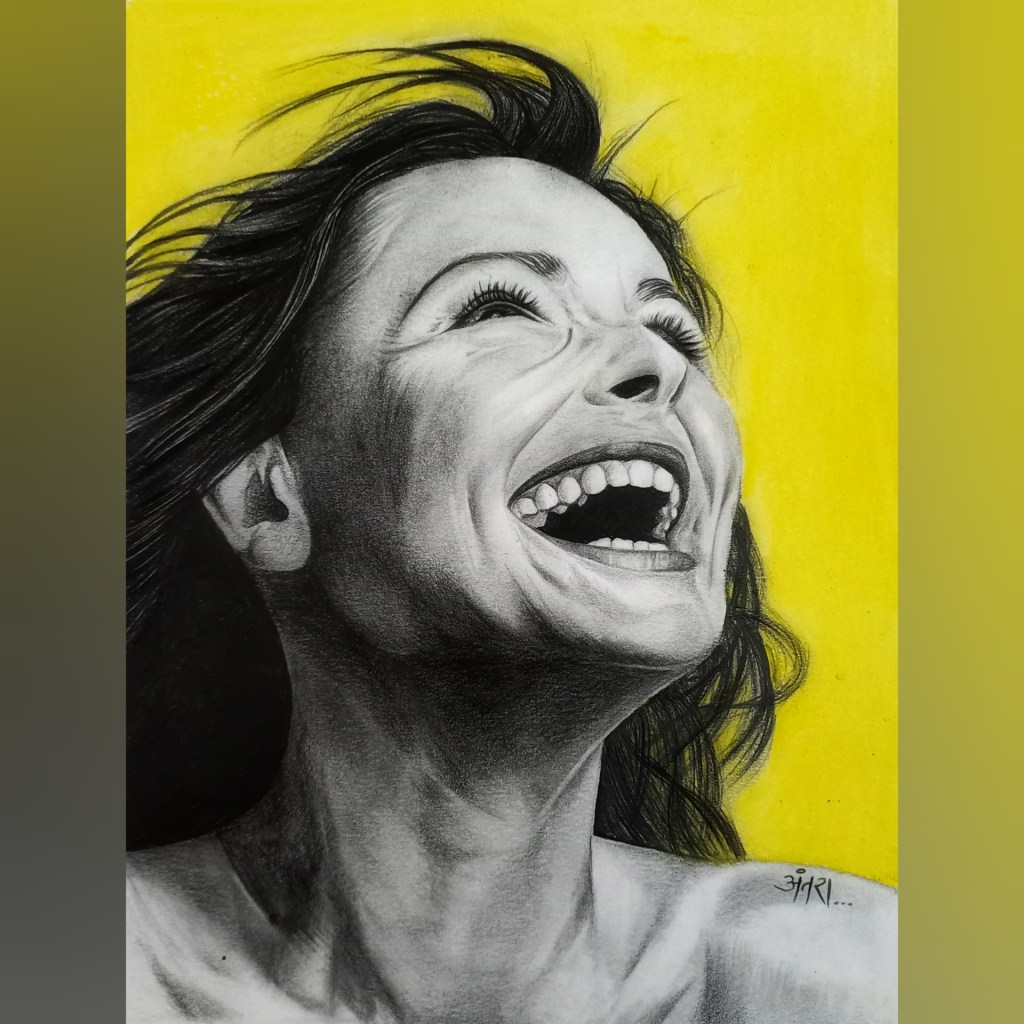
Hasya Rasa is a fundamental flavor of primate life, broadly translated from Sanskrit to English as laughter. Carried through contracted eyes, blown cheeks, and a bright face, Vihasita, one of the six types of laughter according to the Indian Natya Shastra, helps to release tensions and worries. The relaxed open-mouth display of laughter promotes play and levity and is a token of positive emotion and meaningful life. Laughter is contagious–it spreads to others in a fraction of a second. Laughs foster cooperation, even among enemies. Laughter is the secret ingredient of long-lasting relationships. In laughter, one takes a vacation from the conflicts and turmoil of social living. No wonder laughter is an essential rasa of our personal and social lives!
Bibhatsa Rasa

Bibhatsa Rasa, translated as disgust, does a great job of keeping us safe. The moment we sense toxicity around us, disgust is automatically triggered within us, and we feel the urge to move away from that toxicity. Carried through raised upper lip, wrinkled nose, and flared nostrils, disgust protects us from obnoxious smells, stale food, poisonous plants, and unpleasant people! No wonder we feel like throwing up as we walk past the garbage pick-up truck or try to avoid a toxic boss. But be careful with Vibhatsa Rasa because it is the characteristic of the judgmental mind. In judging others and ourselves as “right” or “wrong,” we run into the risk of developing prejudice, bias, and hatred.
Adbhuta Rasa

Adbhuta Rasa or wonder holds a special place in our life. Adbhuta Rasa invokes awe—a powerful but rare experience characterized by bright eyes, dropped jaw, and goosebumps. We are left awe-struck as we immerse ourselves in the wilderness of nature, listen to a mesmerizing musical composition, or meet a renowned celebrity. And we experience awe when we encounter beauty beyond imagination. Awe reminds us of our limitations and ignites modesty, devotion, and gratitude. No wonder we feel tiny and humbled by the awe-inspiring grandeur of the Taj Mahal and the vastness of the Himalayas. Awe fills our lives with happiness and invokes curiosity. And awe diminishes the narrow boundaries of “I” (self-interest) and inspires respect for “We” (unity). How a-we-some is that!
Raudra Rasa

Raudra Rasa or fury is an intense display of anger characterized by glaring eyes, lowered brows, and flared nostrils. Anger fills the mind the moment we feel blocked by something—parents denying permission to go out, a boss declining our leave application, or an ideological rival trying to demean us. In screaming, feuding, and hurling insults at others, our fury signals the inner voice that says, “get out of my way.” Unsurprisingly, anger can destroy relationships and damage inner peace. Constructive rage, on the contrary, can fight social evils and overthrow oppressive powers. We might never be able to escape the anger, but we can certainly learn to channel it toward the greater good—toward building a just, equitable, and humane world for all.
Shanta Rasa

Shanta Rasa corresponds to peace and tranquility. Embodied by closed eyes, relaxed face, and gently closed lips, peace is an experience of ease and contentment. We naturally crave mental calm at the end of a stressful day, dreaded argument, or traumatizing incident. Although it may sound counterintuitive, we humans have become less violent and more peaceful over the past centuries. Most people today prefer peace over conflict as it is invaluable for personal, social, and economic progress. But what triggers peace? A mindful connection with our inner self! Detachment and dispassion from material desires can lead to attaining peace. Values such as empathy and compassion can promote peace and harmony. At times, maintaining peace seems impossible; however, we can always achieve it with collective effort. Never say never!
Bhayanaka Rasa
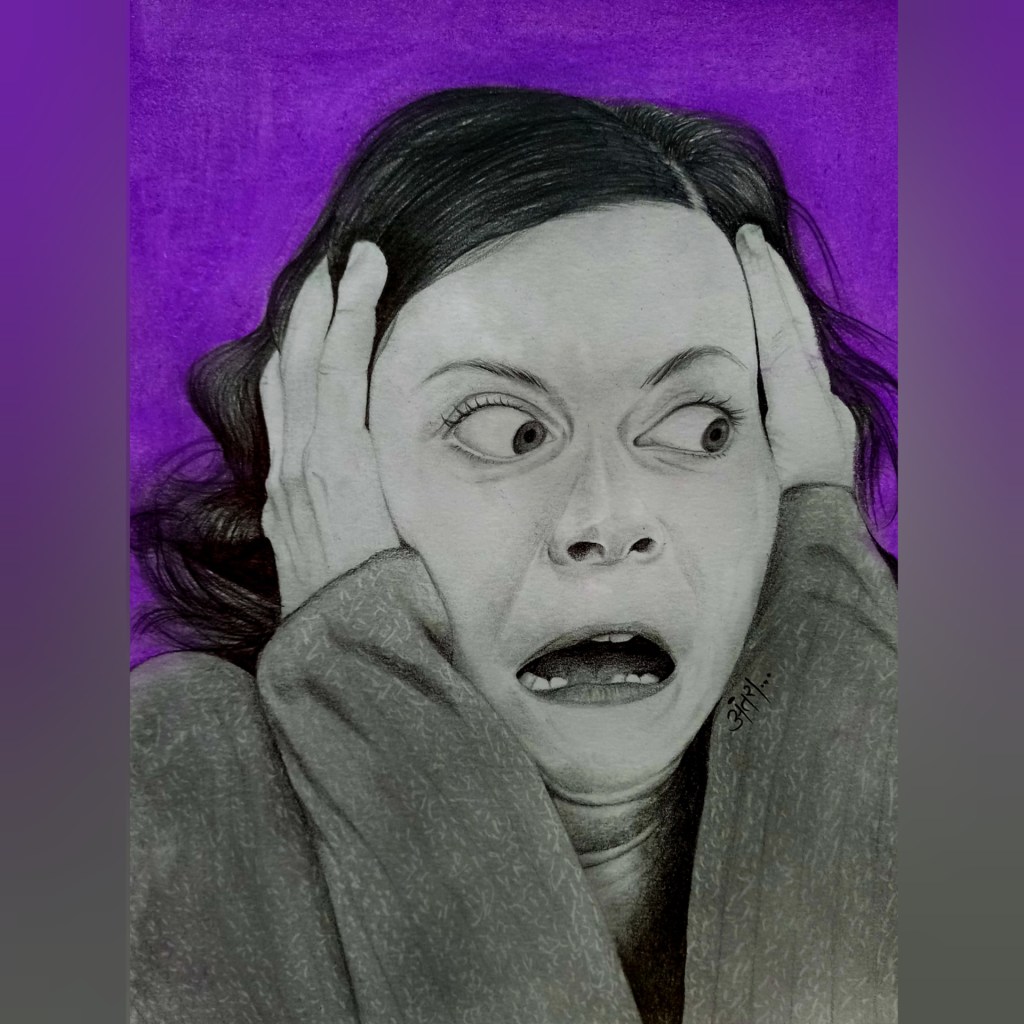
Bhayanaka Rasa is associated with our inner fears and is characterized by raised eyebrows, contracted eyelids, and a mouth pulled sideways. Fear comes in many forms—stage nervousness, exam anxiety, COVID-19 panic, and gun terror. Although portrayed as a negative emotion, our fear of risks keeps us safe. In a dangerous situation, our body automatically prepares to flee or flight for which it suddenly starts to pump more blood and widens the eyes for clearer vision, helping us to run away. Sometimes, we freeze in terror, which is nature’s way of hiding us from the perceived threat. However, prolonged fear can have serious ill effects on our bodies and even lead to anxiety disorders. Save yourself from scary people! Nevertheless, fear can be a great companion. It can be a sign that you are moving beyond your comfort. Kuch Dar acche hote hain!
Shringara Rasa
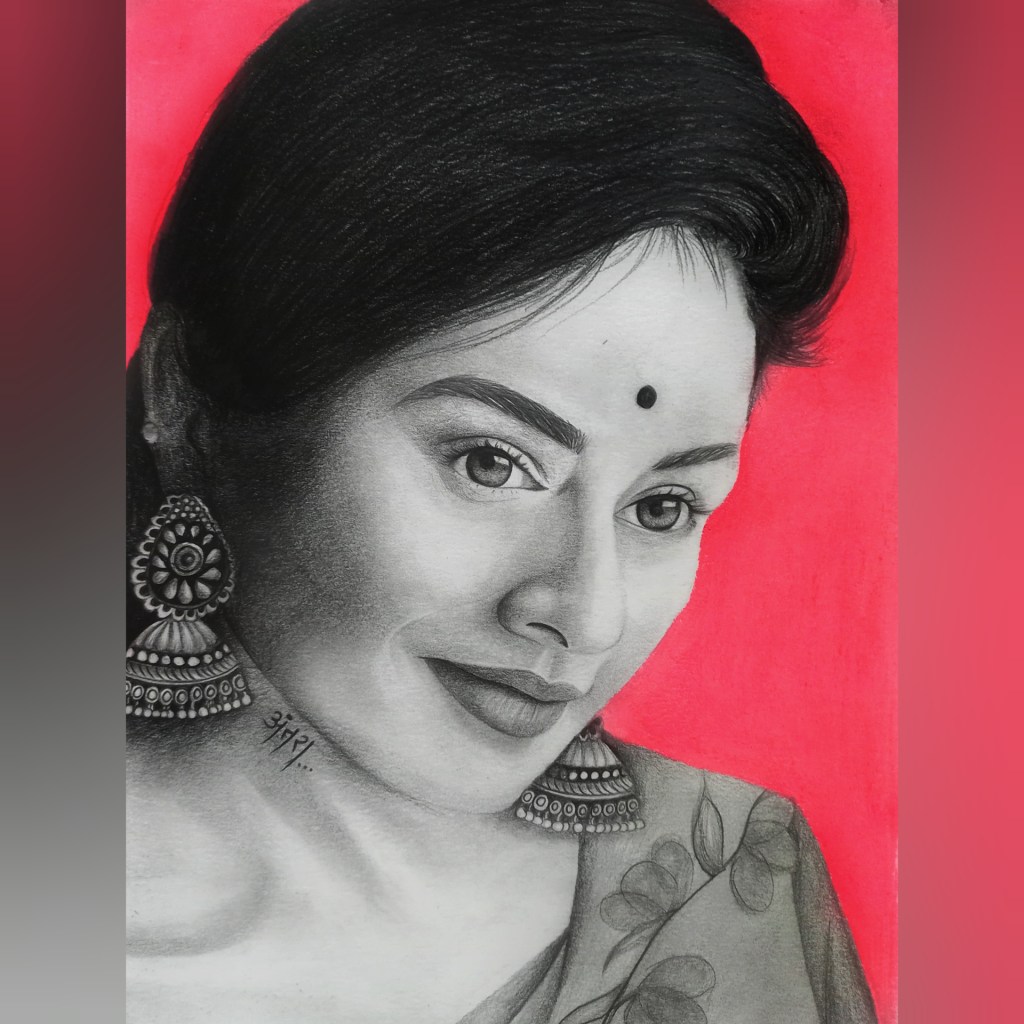
Shringara Rasa, fondly known as the mother of all rasas, corresponds to romantic love. Love encompasses every aspect of our lives in diverse forms. Life begins with caring parental love. The heart-thumping passionate love experienced through intense sexual desire peaks during youthful days. The passion soon meets romance in the form of warm smiles, head tilts, and open-handed gestures. Romantic love marks the enduring devotion of long-term committed lovers. Feelings of trust and devotion are associated with the release of Oxytocin, aka the love hormone. What else triggers Oxytocin? Chocolate does! Did you think it was a coincidence that chocolate is the language of romantic love? And finally, there is the love of humanity—the binding force behind all positive human interactions such as trust and generosity. Want to know the key to a fulfilling, meaningful life? A nice mix of all four loves–parental caregiving, passion, romance, and love of humanity.
Karuna Rasa
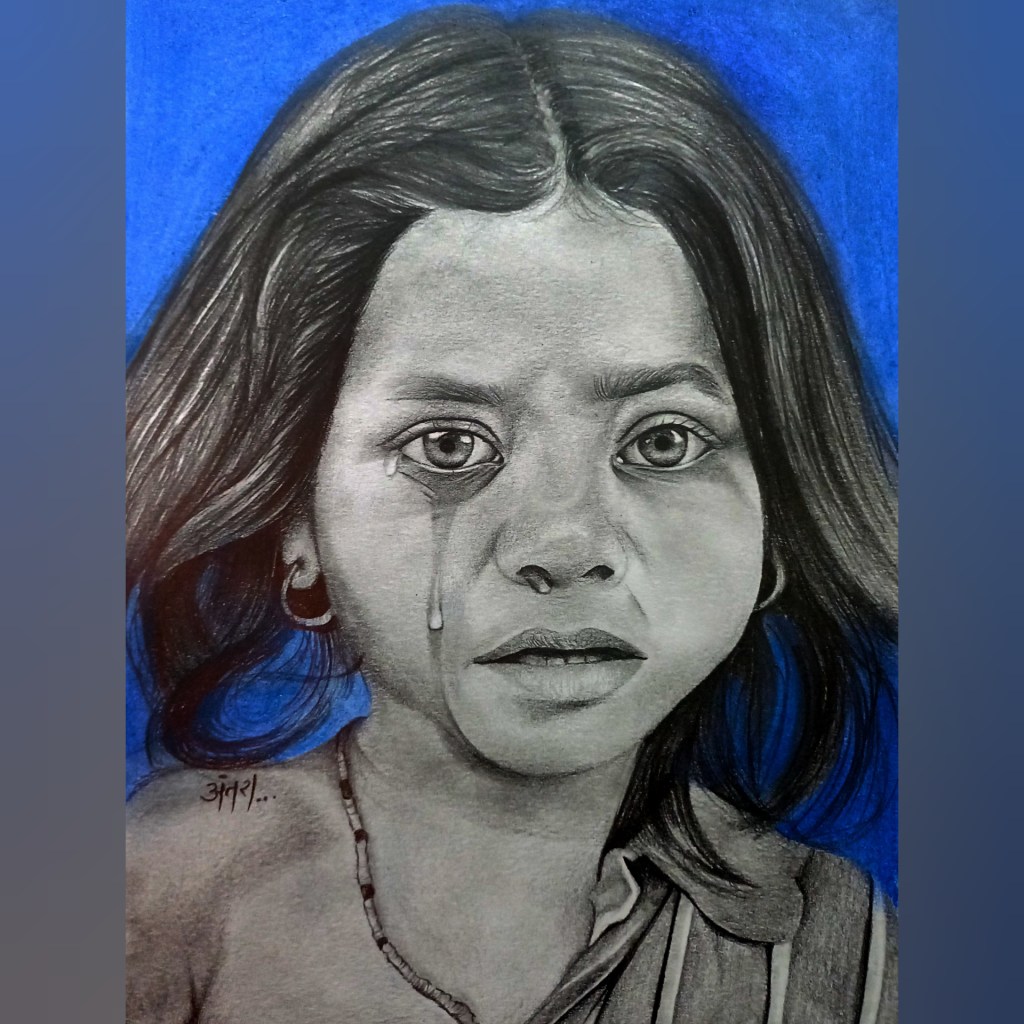
Karuna Rasa is depicted in the emotion of sadness. All sadness arises from the feeling of loss and is signaled through oblique eyebrows, pulled-down lips, and often a downward gaze. Sadness is a universal experience that binds us as one. One’s sadness evokes another’s compassion. Witnessing others’ misery automatically makes us want to help them. As Indians have known it for centuries, compassion or Karuna is an ever-powerful emotion that makes us humane. Contrary to Eastern wisdom, Western thinking has time and again portrayed humans as inherently selfish, competitive, and ugly. However, new evidence now confirms that compassion and kindness are coded in our genes. We are born to be selfless. We are born to be caring. And we are born to be noble! It is our concern for the welfare of others, not just our own, that makes us who we are–humans.
Veera Rasa

Veera Rasa is a powerful experience of heroism. Prideful eyes, flared nostrils, and an erect head radiate the energy, determination, and perseverance that underlies heroism. Although heroism is often perceived as gallant acts of warriors or Yuddha Veera, it scopes far beyond the battleground. Heroism lies in enthusiastically helping others despite its cost (Dana Veera), in protecting others even if they are strangers and enemies (Daya Veera), and in acting with conscience regardless of self-interest (Dharma Veera). Heroism fills our lives with moral courage to defeat the evil within and outside of us, and what better occasion than Dusshera to celebrate this triumphant spirit? We can all be heroes in our own ways, can’t we?
We hope you enjoyed our series depicting nine aesthetic flavors described in Bharat Muni’s Natya Shastra. However, we only highlighted the fundamental emotions or Sthayi Bhava depicted in Navarasas and left out the aesthetic pleasure invoked by them.
Emotions make up a big part of being human. We sincerely hope that our combination of visual portrayal and narrative description of fundamental emotions may help enhance self-awareness of emotions and contribute to emotionally intelligent decision-making.
For those interested in reading more about emotions, we recommend reading the book, “Born To Be Good: The Science of a Meaningful Life” by Dr. Dacher Keltner and visiting the website called the “Atlas of Emotions” by Dr. Paul Ekman and His Holiness the Dalai Lama. Let our emotions fulfill our lives with meaning and purpose!
About the artist: Antara Chowkase is a passionate Mechanical Engineer and an artist. She is a co-founder of ArtNotes, a creative art institute for all ages to explore their unique artistic sides. To see Antara’s artwork, visit her Instagram page and Artnotes’s page.
 Aakash Chowkase
Very interesting….nicely presented.
LikeLike
Thank you, dada!
LikeLike